1 mL to mg (Medicine)
Accurately convert liquid medication volume (mL) to dosage (mg) based on concentration.
How to Convert 1 mL to mg for Medicine
In medicine, converting milliliters (mL) to milligrams (mg) is not a direct conversion like length or time. This is because mL measures the physical volume of the liquid in the syringe or cup, while mg measures the weight of the actual active pharmaceutical ingredient dissolved inside that liquid.
To convert 1 mL to mg, you must locate the concentration (or strength) printed on the medication bottle. It is usually written as a ratio, such as “160 mg / 5 mL” or “100 mg per 5 mL”.
The Medical Conversion Formula
To determine how many milligrams are in your specific volume of liquid, you multiply your volume (mL) by the concentration (mg/mL).
Example 1 (Children’s Tylenol): The bottle says 160 mg per 5 mL. First, divide 160 by 5 to find the concentration per single mL. That equals 32 mg/mL. If you draw up exactly 1 mL in a syringe, you are giving exactly 32 mg of medicine.
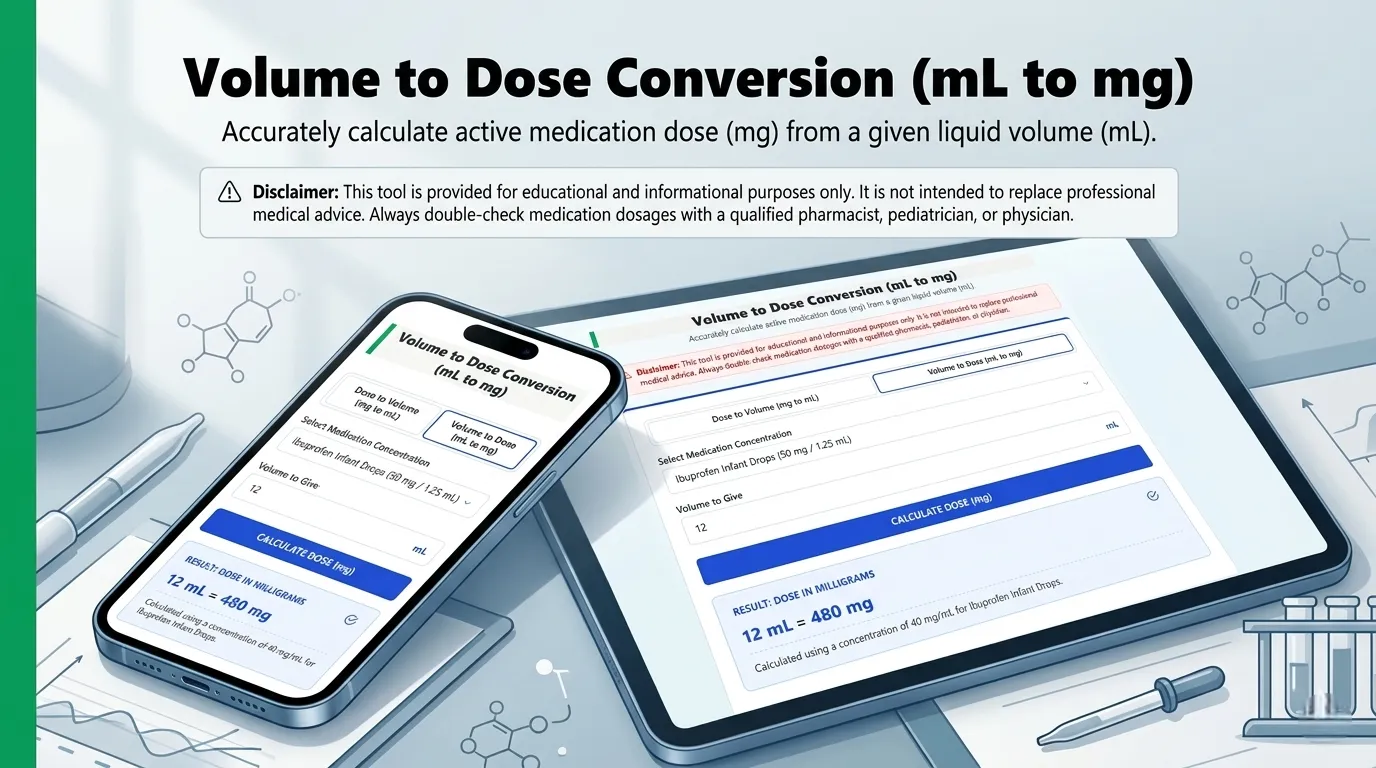
Example 2 (Infant Ibuprofen Drops): The bottle says 50 mg per 1.25 mL. Divide 50 by 1.25, which equals 40 mg/mL. Therefore, 1 mL of these drops contains 40 mg of medicine.
Why Doesn’t 1 mL Equal 1 mg?
A common misconception is that 1 milliliter equals 1 milligram. This is only true for pure water at a specific temperature (where 1 mL of water weighs 1,000 mg, or 1 gram). In medicine, a liquid suspension is mostly composed of water, flavoring, and syrups. The “mg” you are measuring is just the tiny fraction of active drug floating within that liquid.
Because drug manufacturers create different formulas for infants, children, and adults, the amount of active drug (mg) packed into 1 mL of liquid can vary drastically from bottle to bottle. Always read the label.
Common Medication Concentrations
The table below highlights how many milligrams are present in 1 mL and 5 mL (one standard teaspoon) of common over-the-counter and prescription liquid medications.
| Medication Type | Bottle Label (Strength) | Amount in 1 mL | Amount in 5 mL |
|---|---|---|---|
| Acetaminophen (Children’s) | 160 mg / 5 mL | 32 mg | 160 mg |
| Ibuprofen (Children’s) | 100 mg / 5 mL | 20 mg | 100 mg |
| Ibuprofen (Infant Drops) | 50 mg / 1.25 mL | 40 mg | 200 mg |
| Diphenhydramine (Benadryl) | 12.5 mg / 5 mL | 2.5 mg | 12.5 mg |
| Cetirizine (Zyrtec) | 5 mg / 5 mL | 1 mg | 5 mg |
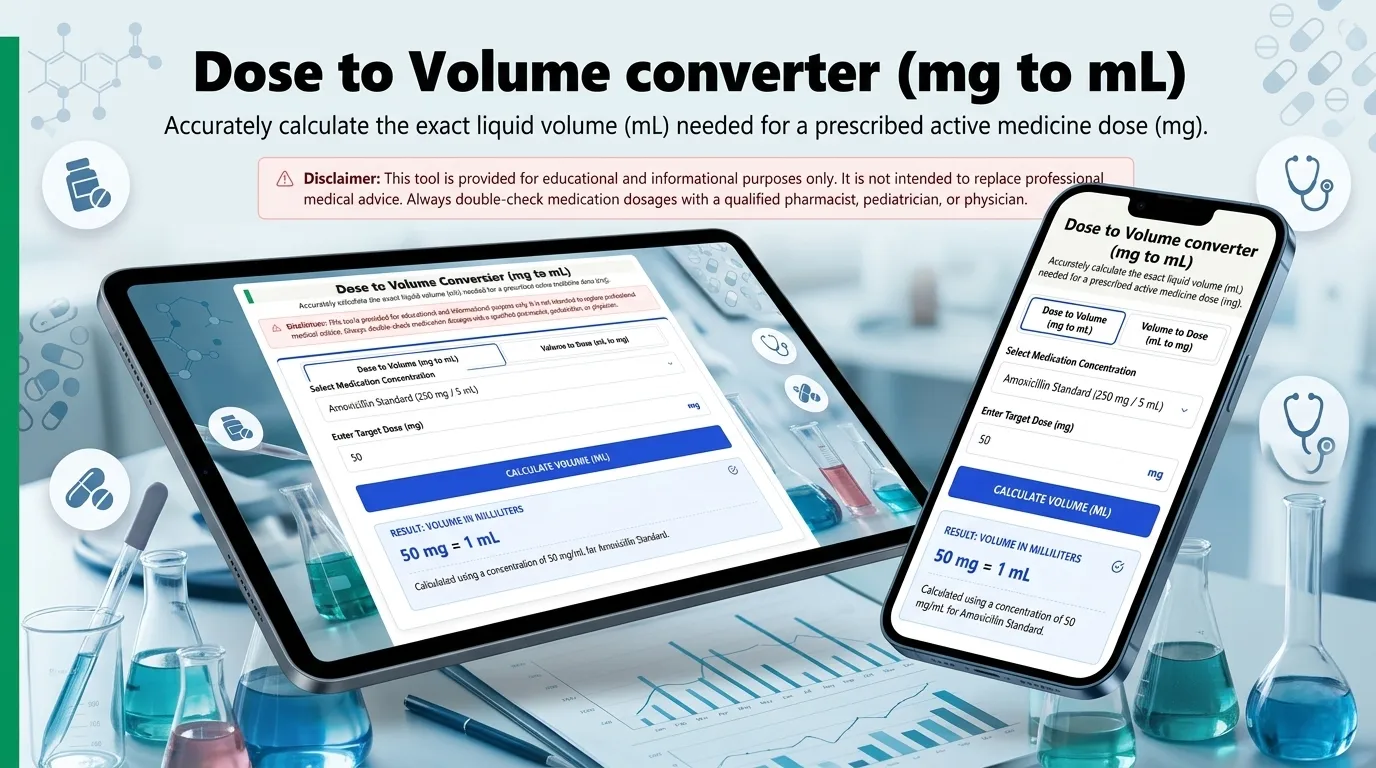
| Amoxicillin (Standard) | 250 mg / 5 mL | 50 mg | 250 mg |
| Amoxicillin (High Dose) | 400 mg / 5 mL | 80 mg | 400 mg |
References & Medical Safety
When administering liquid medication, especially to pediatric patients, always use the oral syringe or dosing cup provided with the medication. Kitchen teaspoons are not standardized and can lead to dangerous overdosing or underdosing.
- American Academy of Pediatrics (AAP), Medication Safety and Dosing Guidelines
- U.S. Food and Drug Administration (FDA), Using Liquid Medications Safely
- National Institutes of Health (NIH), Understanding Liquid Drug Concentrations